


Keeping food out of the danger zone is one of the simplest ways to prevent food poisoning — both at home and in commercial kitchens. Whether you’re preparing food at home or running a food business, knowing the temperature danger zone (and how to avoid it) is essential.
The danger zone temperature for food in the UK is 8-63 °C.
This is the temperature range where harmful bacteria in foods can grow most rapidly.
Key danger zone facts:
Click on the titles or arrows to read.
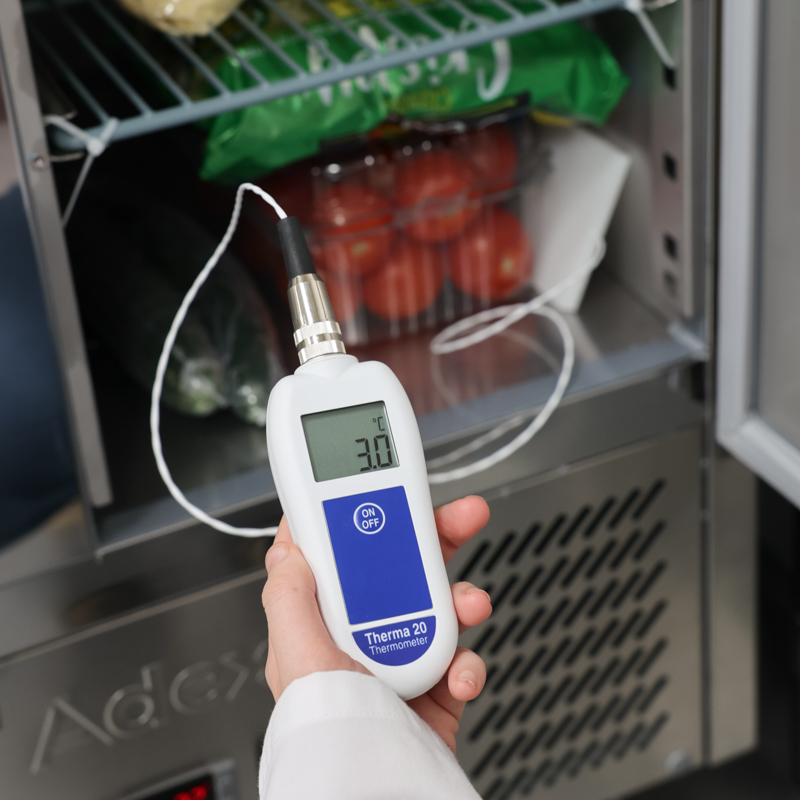
Below 8 °C, but ideally below 5 °C. Foods stored at 8 °C are safe but spoil more quickly.
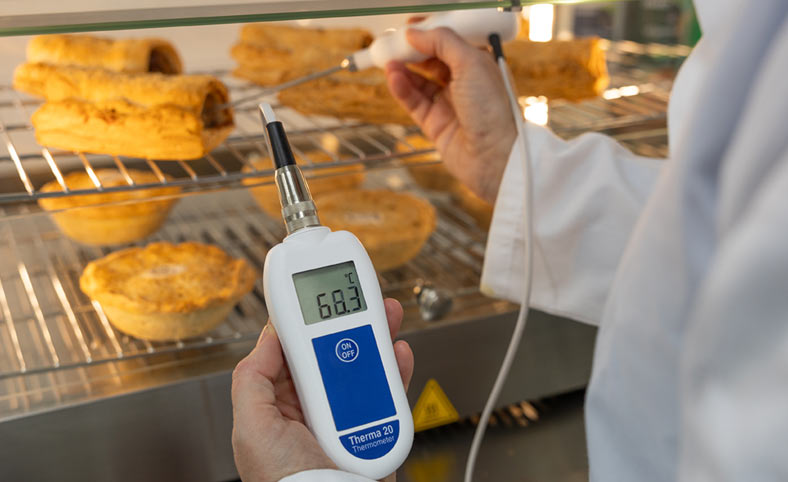
Ensure hot food stays above 63 °C.
Cook food to its recommended safe temperature.
Cool hot food to below 8 °C within two hours of cooking.
Reheated food should reach 75 °C for 30 seconds
Use a thermometer probe to ensure food stays out of the danger zone.
If food has been in the danger zone for more than two hours, you should discard it.
Cooking food that has been in the danger zone for over two hours will not destroy harmful bacteria caused by improper storage.
If cold food has risen above 8 °C for less than two hours, you can chill it as quickly as possible.
If hot food has dropped below 63 °C for less than two hours, you can cool or reheat it (make sure to only reheat food once.)
Poultry, Pork and Reheated Foods
These should reach 75 °C throughout for 30 seconds*.
Red Meat
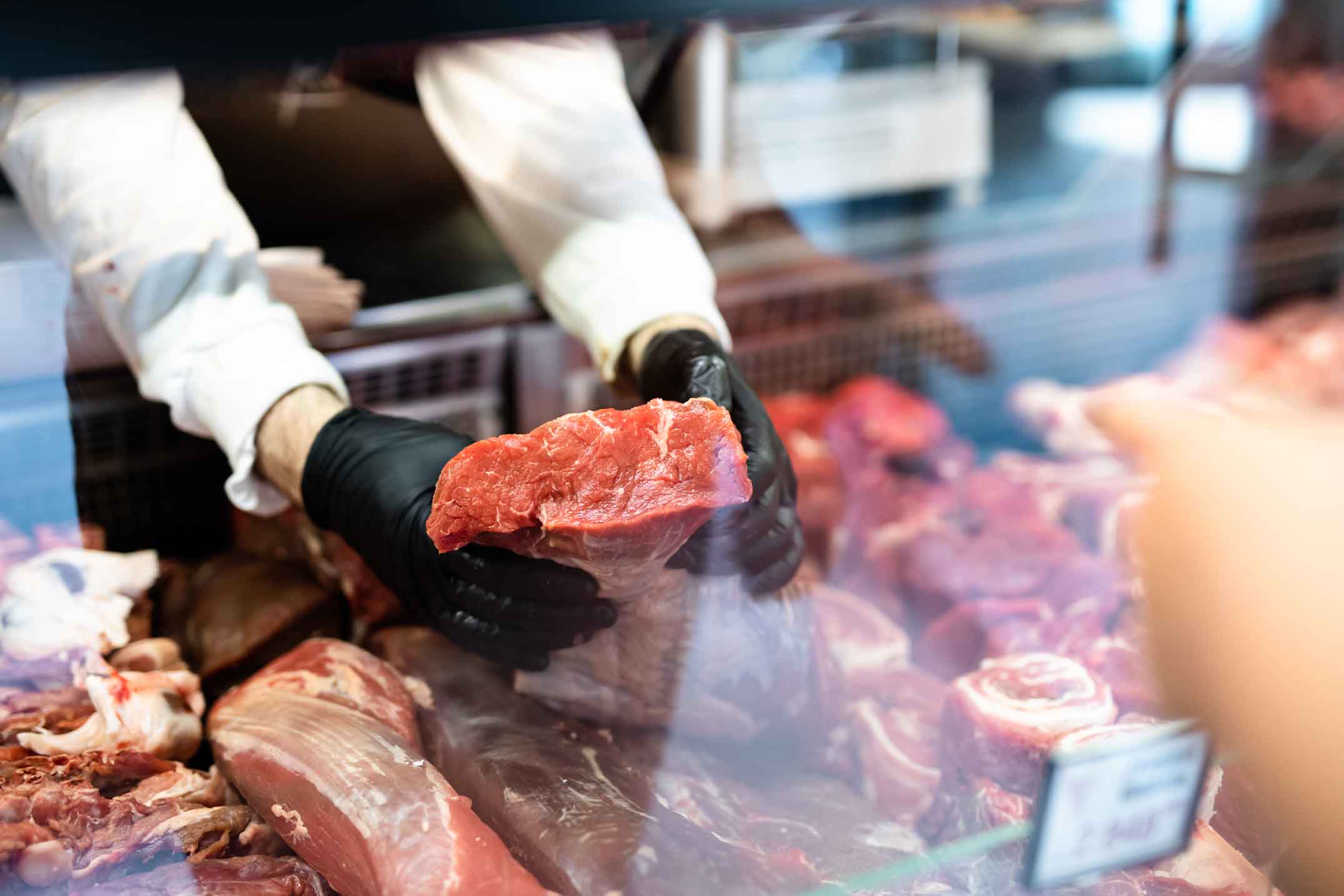
Beef and lamb joints and steaks only need searing on the outside to remove harmful bacteria. They are safe to eat with an internal temperature as low as 52 °C (rare).
Minced Meat
Minced beef, lamb or pork (including items like sausages and kofta) should reach 75 °C throughout for 30 seconds. This is because the harmful bacteria from the outside of the meat is mixed throughout the mince.
Fish
You should cook fish to 60 °C to kill harmful bacteria.
Check out our cooking temperature chart for a full list of safe food temperatures.
*Time and Temperature Combinations
Food can be made safe by cooking it hotter for a shorter time, or slightly cooler for longer — both kill bacteria effectively.
Here is the full list of combinations recommended by the Food Standards Agency (FSA):
• 60 °C for 45 minutes
• 65 °C for 10 minutes
• 70 °C for 2 minutes
• 75 °C for 30 seconds
• 80 °C for 6 seconds
Chilled Foods
Cooking Foods
Cooling Foods
Hot-Hold Foods
Probe items using a food thermometer to ensure they stay above 63 °C.
The Danger Zone Temperature is 8-63 °C
Harmful bacteria grow rapidly in the danger zone.
Discard Food After 2 Hours
If it has been kept between 8 °C and 63 °C.
Store Food at Recommended Temperatures
Below 8 °C for chilled foods, or above 63 °C for hot foods.
Cook Foods to Recommended Temperatures
75 °C for 30 seconds for most items.
Chill Hot Food Quickly
Cool to below 8 °C within two hours.
Use Food Thermometers
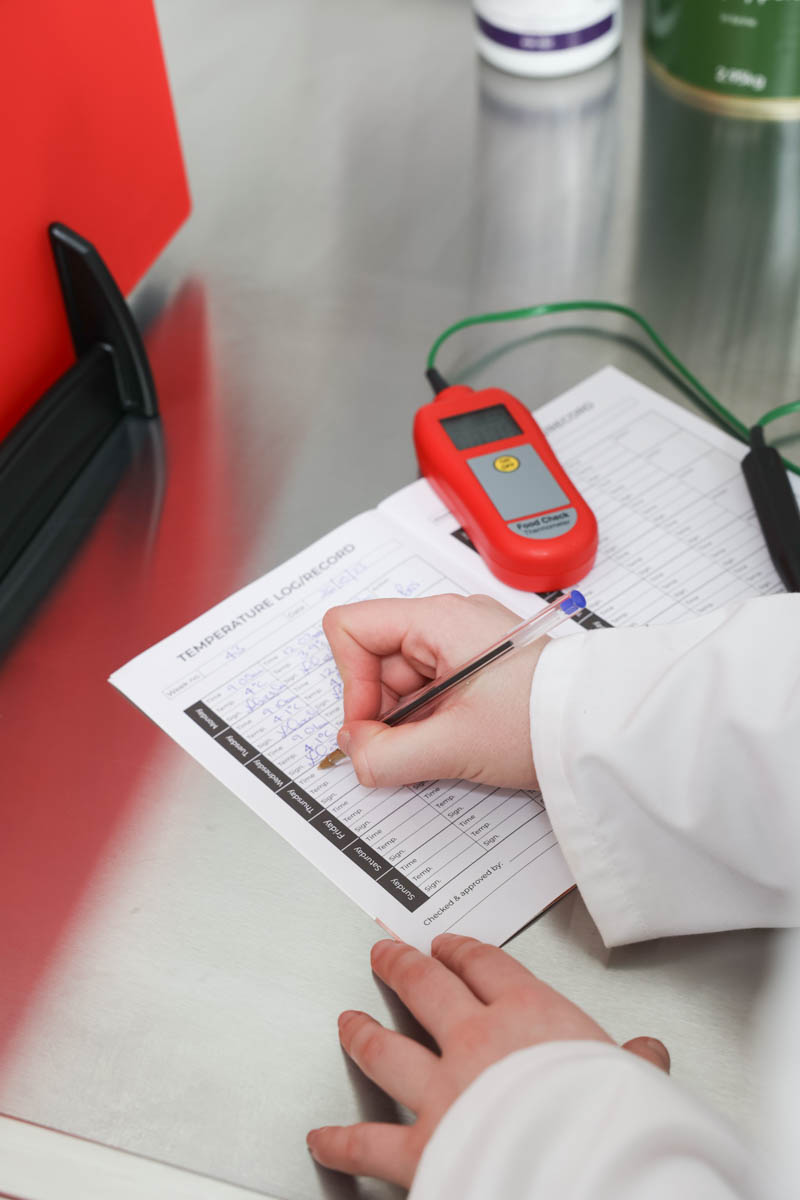
Check food storage and service temperatures regularly
Click on the titles or arrows to read.
8-63 °C is the temperature range in which harmful bacteria in food grow most rapidly, potentially reaching dangerous levels that can cause food poisoning.
You can leave perishable items out of the fridge for two hours. After this time, you should discard it.
Reheating does not kill bacteria that is caused by improper storage. You should only reheat food that has not been in the danger zone for more than two hours. Reheat cooked food only once, ensuring it reaches 75 °C.
An internal temperature of 75 °C will kill harmful bacteria in chicken.
Fresh food must be kept below 8 °C, but the ideal fridge temperature is 3-5 °C. Frozen foods should be kept below -18 °C.
Placing hot food in the fridge can raise the fridge temperature, putting other perishables at risk. It's best to cool hot food quickly before placing it in the fridge within two hours.
To cool hot food quickly:
We use third-party cookies to enhance your browsing experience, analyze site traffic, provide live chat and personalise content in accordance with our Privacy Policy.